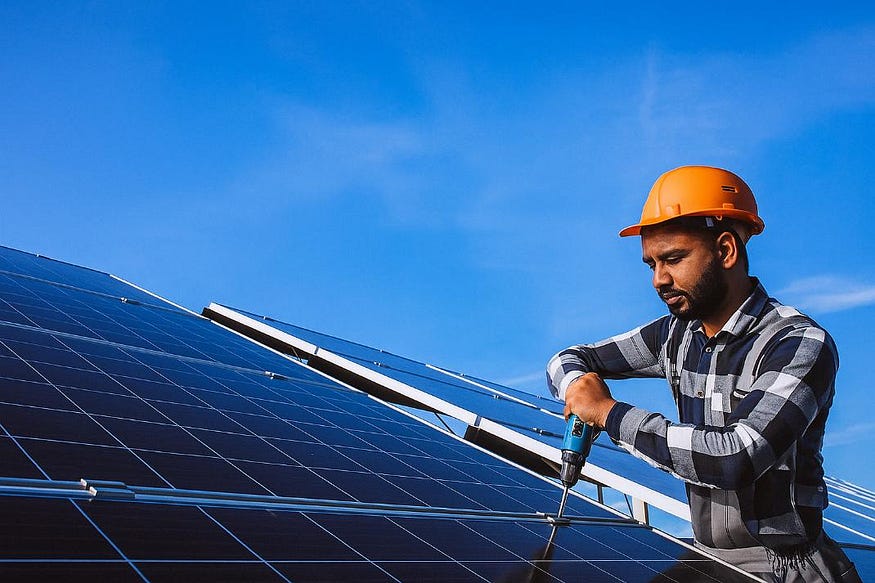
Introduction: Why Lucknow Is Going Solar
Lucknow’s rising electricity tariffs and long, sunny days make rooftop solar one of the smartest investments for homeowners and businesses. Residents are discovering that a properly designed solar system can cut monthly bills by 60–90% while protecting them from future tariff hikes. At the same time, government subsidies and easy financing have removed most of the upfront cost barrier.
In this guide, explore everything needed before installing solar panels in Lucknow — from system types and sizing to subsidies, roof requirements and installation timelines. By the end, readers will know exactly how to plan a rooftop solar project and what to expect when working with a professional installer.
Section 1: How Rooftop Solar Actually Works
A rooftop solar system is a mini power plant on the roof that converts sunlight into usable electricity for a home or business. Solar panels generate direct current (DC), which flows into an inverter that converts it into alternating current (AC) used by all appliances. When the sun is strong, the system first powers connected loads; any extra power in an on‑grid setup is exported back to the DISCOM through a bidirectional meter, earning credits on the electricity bill.
Modern systems also come with safety protections, surge arrestors, earthing and monitoring devices. Through a mobile app, users can see daily generation, approximate savings and whether the plant is performing as expected. This transparency is one reason customer confidence in rooftop solar has grown rapidly in cities like Lucknow.
Section 2: Types of Solar Systems in Lucknow
For most homes and small businesses, there are three main solar configurations to choose from:
- On‑grid solar system
Connected to the local electricity grid, this system has no batteries and is ideal for locations with relatively stable supply. It offers the best return on investment because there is no battery cost and excess energy is credited through net‑metering or net‑billing.
- Off‑grid solar system
Designed for areas with frequent or long power cuts, this system uses batteries to store solar energy for backup. While it provides energy independence, it is costlier and requires careful battery maintenance and replacement after a few years.
- Hybrid solar system
A hybrid setup combines the benefits of both: it stays connected to the grid while also using batteries for backup. It is a premium option for customers who want uninterrupted power plus long‑term bill savings.
An experienced installer will study the existing electricity bill, backup requirement and roof space to recommend which system type makes the most sense.
Section 3: How Much Solar Capacity Does a Home Need?
Instead of guessing panel count, start with the average monthly electricity consumption shown on recent bills. For many homes in Lucknow, a 3–5 kW on‑grid rooftop system is enough to handle key loads like fans, lights, TVs, refrigerators and some air‑conditioners. A rough thumb rule is that 1 kW of rooftop solar can generate about 4–5 units of electricity per day in good conditions.
Roof space is equally important. A standard 1 kW system typically needs around 80–100 sq. ft. depending on panel wattage and structure design. A professional survey measures usable area after excluding shaded, weak or inaccessible portions of the roof. During this visit, engineers also check the direction and tilt angle so that panels face maximum sunlight throughout the year.
Section 4: Cost and Payback for Solar in Lucknow
The total cost of a solar panel installation depends on several factors: system capacity, on‑grid vs off‑grid, structure height, panel brand, inverter type and wiring quality. While exact prices vary between projects, homeowners usually see payback within 4–6 years for a well‑designed on‑grid system. After this period, generated power is practically free for the remaining life of the plant, often 15–20 more years.
Instead of focusing only on initial cost, it helps to look at lifetime savings. When electricity tariffs rise every year, a rooftop solar plant acts like pre‑paid power, locking in a much lower effective rate per unit. Many households recover their investment even faster if they shift high‑consumption activities like cooling, ironing and washing to daytime when solar production is highest.
Section 5: Government Subsidy and Approvals
One of the biggest accelerators for residential solar adoption is the availability of government subsidy. Under current central and state programs, eligible homeowners installing grid‑connected rooftop systems can receive a direct transfer of subsidy after the project is commissioned and approved. The exact amount depends on system size and scheme rules, but it can reduce upfront cost significantly.
To claim these benefits, customers must follow the prescribed process: register on the national portal, choose an empanelled installer, get technical feasibility from the DISCOM, complete installation, obtain inspection and commissioning certificate, and then submit documents for subsidy release. A good solar company guides customers through each step so that paperwork does not become a burden.
Section 6: Step‑by‑Step Solar Installation Process
A professional solar installation in Lucknow typically follows these stages:
- Site visit and load analysis
Engineers visit the property, study previous electricity bills, measure roof strength and check for shadows from nearby buildings, trees or water tanks. - System design and proposal
The design team prepares a layout showing panel placement, structure type, inverter location and cable routes, along with an estimate of cost, expected generation and payback period. - Approvals and documentation
Once the customer approves the proposal, the company handles DISCOM applications, net‑metering forms and any required structural drawings. - Material delivery and installation
Structures are fixed, panels are mounted, DC and AC wiring is completed, earthing is done, and the inverter and protections are installed according to safety standards. - Testing, commissioning and net‑metering
The team tests the system, checks generation and coordinates with the DISCOM for meter installation. After commissioning, the plant starts feeding energy to the home and grid. - Training and handover
Customers receive a basic walkthrough of the monitoring app, safety precautions, cleaning schedule and whom to contact for support.
For a typical residential 3–5 kW system, this entire process — from booking to power‑on — usually completes within a few weeks, depending on approvals and meter availability.
Section 7: Maintenance, Cleaning and Performance
Solar panels have no moving parts, which keeps maintenance simple. The most important routine task is cleaning dust and bird droppings from the glass surface to maintain output. In many parts of Lucknow, washing panels with clean water every 15–30 days is enough unless the site is extremely dusty.
Inverters and electrical components benefit from periodic inspection by trained technicians. Annual maintenance visits check wiring, earthing, mounting structures and generation trends. If production drops suddenly, remote monitoring often flags the issue early so it can be fixed before it affects savings for long.
Section 8: Common Myths About Solar in Lucknow
Many families delay their decision due to misconceptions that no longer hold true:
- “Solar doesn’t work on cloudy days.”
Panels still generate power in diffused sunlight, though output is lower than on bright days. Over a year, production averages out based on seasonal patterns.
- “Rooftop solar will damage the roof.”
When structures are designed correctly and waterproofing is respected, solar installations often protect the roof surface from direct heat and weathering.
- “Maintenance is very difficult.”
Modern systems need only basic cleaning and annual professional checks. Most technical issues relate to simple things like loose connections or software alerts.
Clearing these myths helps customers focus on real considerations such as load requirement, budget and long‑term plans for the property.
Section 9: Why Choose a Local Installer in Lucknow
Going solar is not a one‑time purchase; it is a 20‑plus‑year relationship with the installer. Working with a local company brings several advantages: quick site visits, better understanding of DISCOM rules, easy communication for service calls and familiarity with local climate and roof types. Local teams can respond faster during emergencies or when customers notice any change in performance.
Experienced providers also have a portfolio of completed projects across different neighbourhoods and types of roofs. Visiting a few of these installations or speaking to existing customers gives new buyers extra confidence before signing up.
Section 10: Taking the First Step Toward Solar
For anyone in Lucknow considering solar, the easiest starting point is a quick assessment of monthly electricity bills and roof pictures. With this information, a professional solar EPC company can estimate system size, potential savings and tentative cost range. A detailed site survey then fine‑tunes the design and creates a clear, customised proposal.
As more homes, shops, schools and factories switch to rooftop solar, the city moves closer to cleaner air, lower carbon emissions and energy independence. The earlier a household installs solar panels, the longer it can enjoy compounding savings and the pride of generating its own power from the sun.
If you share your preferred word count and focus (for example “more subsidy‑heavy” or “more technical guide”), this draft can be tightened into a final blog article ready to publish with headings, FAQs and internal links to your service pages.
Whether you need affordable solar panel for home and commercial rooftop solar panel installation, a reliable home solar panel system or a complete commercial solar power system, professional engineers design and install the right solar panel lucknow solution using quality solar equipment, robust solar rooftop solutions and tailored solar energy solutions.